
When choosing an algo trading platform, it is easy to focus on the software first: features, programming languages, costs, supported brokers, and backtesting capabilities.
All of these things matter. But choosing a good platform is not enough to make a trading strategy work.
An algo trading platform should allow you to develop, test, and automate a strategy in a way that fits the markets and trading approach you use. But even the most advanced software cannot compensate for a poorly designed or inadequately validated trading system.
That is why, in Andrea Unger’s approach and the Unger Method™, technology is only one part of a broader trading system development and validation process.
So, what should you actually look for in an algo trading platform? And which features matter most before you choose one?

What Is an Algo Trading Platform?
An algo trading platform is software that allows traders to perform one or more tasks involved in developing and running rule-based trading strategies.
Depending on the platform, it may allow you to:
- turn trading rules into code or define them through a visual interface;
- backtest strategies using historical data;
- analyze strategy performance;
- generate trading signals;
- automatically send orders to a broker;
- monitor strategies and positions in real time.
Not all of these functions necessarily have to be handled by the same software.
It is useful to distinguish between the development and backtesting environment and the infrastructure used for live execution. In some cases, the same platform handles both. In others, traders may use different tools at different stages of the process.
This distinction matters because it changes what you should look for when evaluating a platform.
What Is the Best Algo Trading Platform?
There is no single best algo trading platform for every trader and every strategy.
Someone developing a single strategy on an S&P 500 future may have very different requirements from a trader managing multiple systems across different markets.
So before comparing platforms, a more useful question is:
What do I need to develop, test, and potentially automate the strategies I want to trade?
Relevant factors may include market coverage, the availability and quality of historical data, programming capabilities, backtesting tools, order management, broker integration, costs, and monitoring features.
A generic ranking of the “best algo trading platforms” cannot easily account for all of these variables.
That is why understanding how to evaluate a platform is generally more useful than simply choosing whichever one happens to rank first on a list.
The Trading System Comes Before the Platform
One mistake traders can make when approaching systematic trading is spending too much time choosing tools before establishing a sound process for developing and validating their strategies.
A platform can execute the instructions you give it extremely well. That does not mean those instructions automatically make up a robust trading strategy.
In the Unger Method™, the development process generally starts with a relatively simple trading idea. That idea is translated into objective rules and tested on a sufficiently representative sample of historical data.
Additional checks are then used to assess whether the results may reflect reasonably robust characteristics of the strategy or whether they depend too heavily on optimization performed on the development data.
One of these checks can be out-of-sample testing, which evaluates the strategy on data that was not used during calibration.
This matters for a simple reason:
A great backtest does not guarantee that a strategy will continue to work in the future.
The purpose of validation is not to provide that guarantee – no such guarantee exists in trading. Instead, it helps reduce the risk of taking a strategy live when its historical performance depends too heavily on the way it was developed or optimized.
Coding vs. No-Code Algo Trading Platforms
One of the first practical decisions is how you want to define the rules of your strategy.
When coding can be useful
Code-based platforms allow traders to translate their trading rules into a programming language or a trading-specific scripting language.
This can provide greater flexibility when developing specific trading logic, customizing order management, or performing more complex analysis.
The trade-off is that it requires additional technical skills or access to tools that can accurately translate a trading idea into code.
When a no-code platform can be useful
No-code or visual algo trading platforms allow users to build strategies by combining predefined rules and conditions without necessarily writing code.
This can lower the barrier to entry and make it easier to test certain ideas.
The limitation is flexibility. What you can build depends on the features and conditions supported by the software. If the platform does not support a specific rule, implementing the strategy exactly as intended may be difficult or impossible.
Neither approach eliminates the need to validate the strategy.
The tools used to express the rules may change, but the principles used to evaluate their robustness do not.
What Should You Look for in an Algo Trading Platform?
There is no universal checklist that works for every strategy, but several factors deserve particular attention.
1. Data Quality and Granularity
A backtest is only as useful as the data behind it.
An algo trading platform should therefore provide access to sufficiently reliable historical data at a level of granularity appropriate for the strategy you want to test.
That does not mean every strategy requires tick-by-tick or one-minute data.
A strategy built on daily bars has very different requirements from a fast intraday system. What matters is whether the data can reasonably represent the conditions under which the trading system is expected to operate.
2. Realistic Backtesting Capabilities
A backtest should tell you more than how much money a strategy would theoretically have made in the past.
You should be able to examine metrics such as drawdown, number of trades, Average Trade, and the distribution of results, while also having the ability to separate data appropriately for in-sample and out-of-sample analysis.
The software does not necessarily need a button labeled “Out-of-Sample Test.” What matters is whether it allows you to structure the development and validation process correctly.
3. Trading Costs and Slippage
The theoretical performance of a trading system can differ from what happens in live trading.
Commissions, slippage, and other execution-related factors can affect results, especially when a strategy has a relatively small Average Trade or trades frequently.
For this reason, it is important to understand whether – and how – the platform allows realistic assumptions about trading costs to be incorporated into a backtest.
The smaller the strategy’s margin of error, the more important these factors can become.
4. Supported Markets, Brokers, and Order Types
A platform can be technically excellent and still be a poor fit for your specific project.
You need to consider which markets and financial instruments it supports, which brokers it can connect to, and which types of orders it can manage.
These requirements depend directly on the strategies you plan to trade.
5. Execution Reliability and Technical Risk
Automated trading also introduces operational risks.
Connections can drop, data feeds can experience problems, and communication with a broker may occasionally fail or behave differently than expected.
Before automating a strategy, it is important to understand how the platform handles these situations.
For example, what happens to existing positions if the platform disconnects? What happens to orders that have already been submitted? Are monitoring tools or alerts available?
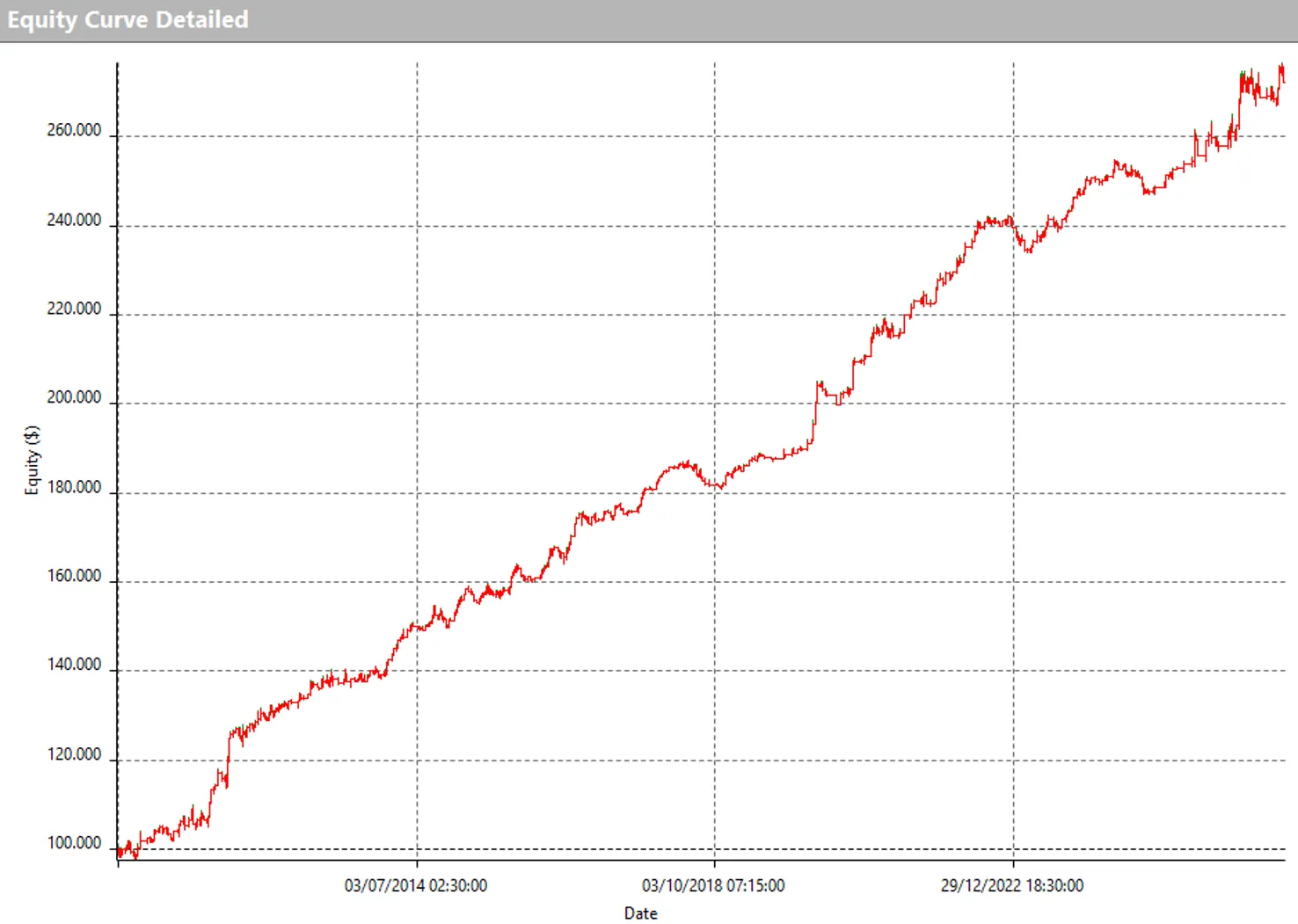
These features may be less exciting than a backtest equity curve, but they can become extremely important in live trading.
Can the Algo Trading Platform Cause Problems?
Yes. It would be misleading to suggest that the platform does not matter.
Data issues, coding errors, differences in order execution, connection failures, or broker compatibility problems can all have real consequences.
The point is different:
When a strategy does not perform as expected, we cannot automatically assume that the platform is the problem.
The trading system itself also needs to be examined: how it was developed, which data was used, how extensively it was optimized, how it was validated, and what assumptions were made about costs and execution.
Changing software does not automatically solve these problems.
Can an Algo Trading Platform Guarantee Profits?
No. An algo trading platform can help you develop, test, automate, and monitor a strategy, but it cannot guarantee that the strategy will be profitable.
Results depend on many factors, including the trading system’s rules, the quality of the data and validation process, execution conditions, trading costs, risk management, and, of course, how markets behave in the future.
This is why our programs place particular emphasis on the process used to develop and validate a strategy.
Technology is an essential tool in systematic trading. But knowing how to use that technology – and, more importantly, knowing what to test – comes before searching for the “perfect” platform.
Frequently Asked Questions About Algo Trading Platforms
What is the best platform for algo trading?
There is no single best algo trading platform for everyone. The right choice depends on the markets you trade, the strategies you want to develop, the historical data you need, your broker, your backtesting requirements, and the level of customization you want.
Do I need to know how to code for algorithmic trading?
Not necessarily. No-code and visual platforms allow traders to define strategies without writing code directly. Coding can, however, provide greater flexibility when you need to implement more specific trading rules or execution logic.
What should a good algo trading platform include?
Important factors can include reliable historical data, backtesting capabilities, support for realistic trading costs and slippage, market and broker compatibility, order management, execution reliability, and monitoring tools.
How much does an algo trading platform cost?
Costs vary significantly depending on the software and services involved. In addition to a platform license or subscription, traders may need to consider market data fees, broker commissions, and other execution-related costs.
Is algorithmic trading always profitable?
No. Automating a strategy means using software to execute predefined rules. It does not make those rules automatically profitable. Even a strategy that performed well in historical testing can experience losing periods or stop working in the future.