
Day Trading: Why the S&P 500 Can Be Challenging and Which Markets to Consider
Need More Help? Book Your FREE Strategy Session With Our Team Today!
We’ll help you map out a plan to fix the problems in your trading and get you to the next level. Answer a few questions on our application and then choose a time that works for you.
Day trading involves opening and closing positions within the same trading session, without holding them from one session to the next. This approach avoids exposure to price changes while the market is closed, but gives strategies less time to generate a profit.
In futures markets, a trading session may include overnight hours. The relevant period is the instrument’s trading day, which does not necessarily match a calendar day.
When evaluating a day trading strategy, one of the first metrics to consider is average trade: the average result per trade needs to be large enough to absorb commissions and slippage while leaving a reasonable cushion. Choosing the market therefore matters just as much as defining entry and exit rules.
In this article, we’ll explore why developing intraday systems for the S&P 500 can be challenging, what to look for in a market, and how to evaluate a strategy before trading it live.
What Is Day Trading, and How Does It Differ From Scalping?
The term day trading describes how long positions are held, rather than how trades are selected. We can trade intraday using a discretionary approach or a trading system: a set of specific rules that we can backtest on historical data and automate.
At Unger Academy, we focus on the second approach: defining trading rules and evaluating their behavior before putting real capital at risk.
Closing all positions before the session ends avoids exposure to gaps between sessions, meaning differences between one session’s closing price and the next session’s opening price. It does not eliminate the risk of losses, slippage, or sudden price moves while trading.
Day trading and scalping are not the same thing. Scalping is a form of intraday trading that aims to capture very short price moves, often holding positions for just seconds or minutes. Other intraday strategies may stay in the market for several hours and restrict entries to specific time windows.
Average Trade, Commissions, and Slippage: Can an Intraday Strategy Cover Its Costs?
Average trade is calculated by dividing a strategy’s total trading profit or loss by the number of trades. To interpret it correctly, we need to know whether the report already includes trading costs.
If commissions and slippage are excluded, average trade still needs to cover them. If they have already been deducted, the figure represents the average result after the costs assumed in the test. Either way, a small cushion makes the strategy more sensitive to any deterioration in execution.
The costs to consider include:
- Commissions: broker commissions and other fees charged for executing trades.
- Slippage: the difference between the expected execution price and the price actually obtained, which can reduce the trade’s profit or increase its loss.
These costs affect both winning and losing trades. In intraday trading, where the move captured by each trade may be relatively small, their impact can be particularly significant.
Why Day Trading the S&P 500 Can Be Challenging
In an earlier discussion of intraday versus overnight trading, Andrea Unger highlighted how difficult it can be to achieve an average trade on the E-mini S&P 500 that is large enough relative to trading costs.
That assessment reflects the context of the analysis, rather than a permanent characteristic of the market. Volatility changes over time, and every system needs to be tested on data relevant to its intended use.
The key point is that a highly liquid market does not automatically offer an exploitable edge for an intraday strategy. We need to determine how much of the price movement the system can actually capture and how much is left after costs.
This does not mean that worthwhile intraday systems cannot be developed for the S&P 500. We’ve already shared an example on our blog, which we’ll discuss below. The challenge is to identify rules that produce sufficiently robust results without fitting them too closely to historical data.
Which Markets Should You Consider for Intraday Trading?
In the analysis mentioned above, Unger identifies crude oil, gold, and RBOB gasoline futures, along with DAX futures, as markets to consider.
The idea is to evaluate the contract’s price range in monetary terms relative to trading costs. Larger potential moves may give strategies more room to work, but they also create risk exposure that needs to be managed carefully.
Choosing a market therefore requires us to consider several factors together:
- The price movement the strategy can realistically capture.
- Liquidity during the intended trading hours.
- Expected commissions and slippage.
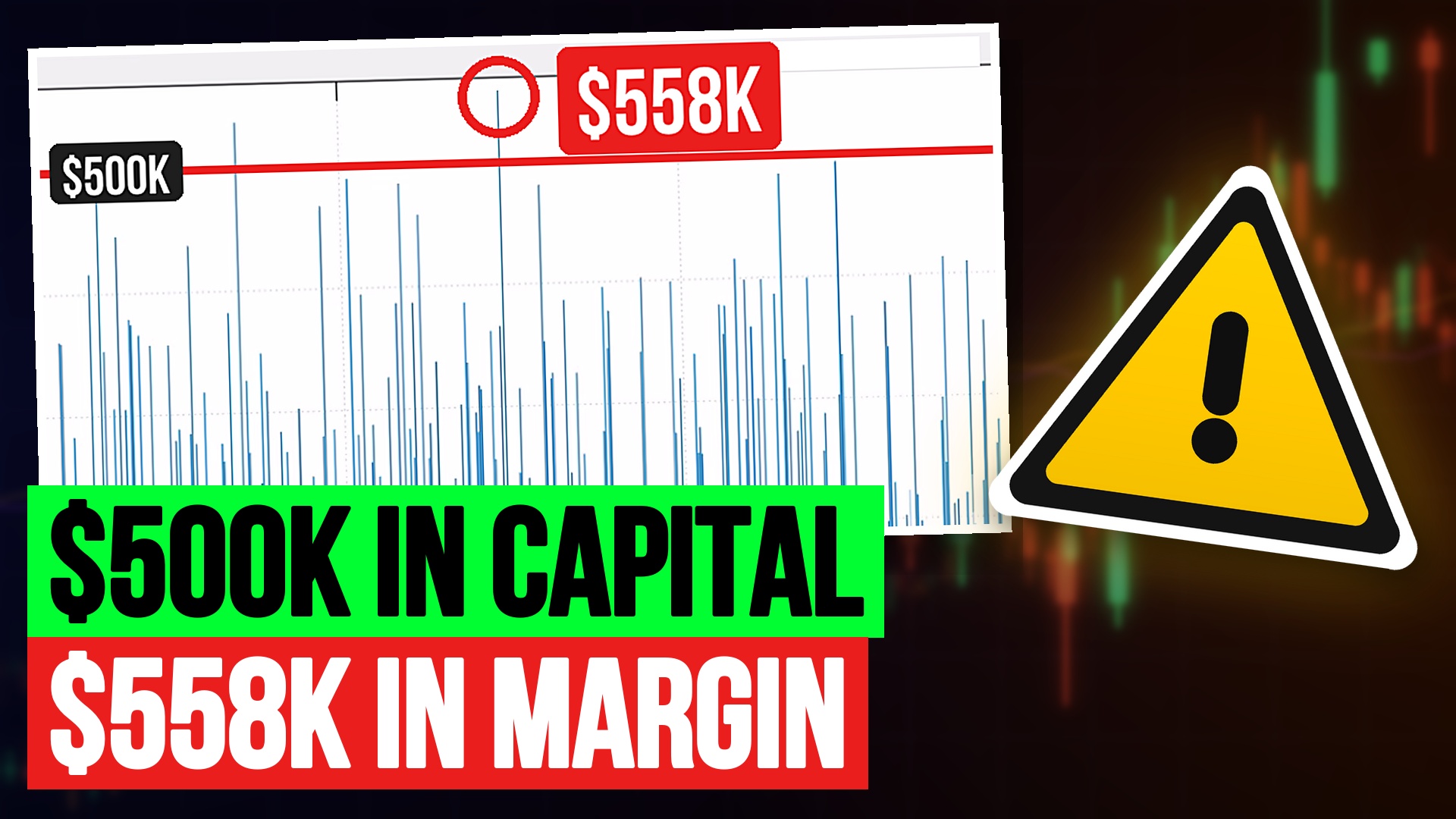
- Contract size and margin requirements.
- Whether potential losses are manageable given the available capital.
Choosing the market with the biggest moves is not enough. The strategy, instrument, and position size need to work together at a manageable level of risk.
Stop Losses and Contract Size: How to Assess Risk
A stop loss placed too close to the entry price may be triggered by normal market fluctuations. A wider stop, on the other hand, increases the potential loss per trade if position size remains unchanged.
There is no single stop amount that works for every system. The stop needs to be evaluated in relation to the strategy’s logic, volatility, contract value, and overall portfolio risk. A stop loss does not guarantee execution at the intended price: under unfavorable conditions, the actual loss may exceed the planned amount.
Smaller contracts can help reduce monetary exposure, but they require their own analysis. Liquidity, spreads, and the relative impact of commissions may differ from those of the standard contract.
If a strategy requires more risk than the account can support, the options are to reduce position size where possible, choose a different instrument, or pass on the strategy. Arbitrarily tightening the stop to fit the available capital can change how the strategy behaves.
Day Trading Strategies: Breakouts, Reversals, and Time-Based Biases
To evaluate a strategy, we need to translate the initial idea into testable rules. Approaches we can explore include breakouts, reversals, and time-based biases.
Breakouts: Entering When Price Breaks a Level
A breakout strategy opens a position when price moves beyond a defined level, such as the previous session’s high or low, or a range established during the first few bars of the trading day.
The goal is to capture a continuation of the move. A characteristic risk is the false breakout: price moves beyond the level but then reverses without following through. Time windows and filters can be tested to refine entries, with their impact assessed across the system’s overall performance.
Reversals and Mean Reversion: Trading a Move Back Toward a Reference Level
Reversal strategies look for a change in the direction of a price move. Mean-reversion strategies aim to capture a return toward a reference point, such as a moving average or a recent price level.
These approaches can behave differently from breakout strategies and need to be evaluated on the specific market. A high win rate alone is not enough: we also need to compare the size of winning trades with the size of losing trades.
Time-Based Biases: Analyzing Trading Hours and Days of the Week
A strategy based on time-related biases looks for recurring patterns associated with particular times, such as a time window or a day of the week.
Simple rules still need to be tested. A pattern observed in historical data may weaken or disappear. We need to study its stability across different periods and avoid selecting only the combinations that produced the best backtest results.
For all these approaches, evaluation includes tests with realistic cost assumptions and checks on data that was not used to select the rules and parameters.
Does Limiting Daily Entries Improve an Intraday Strategy?
In a case study involving an intraday system for the E-mini S&P 500, Andrea Unger examines a trading day marked by repeated entries and consecutive stop losses.
To see whether the problem could be reduced, he tests a cap on the number of daily trades.
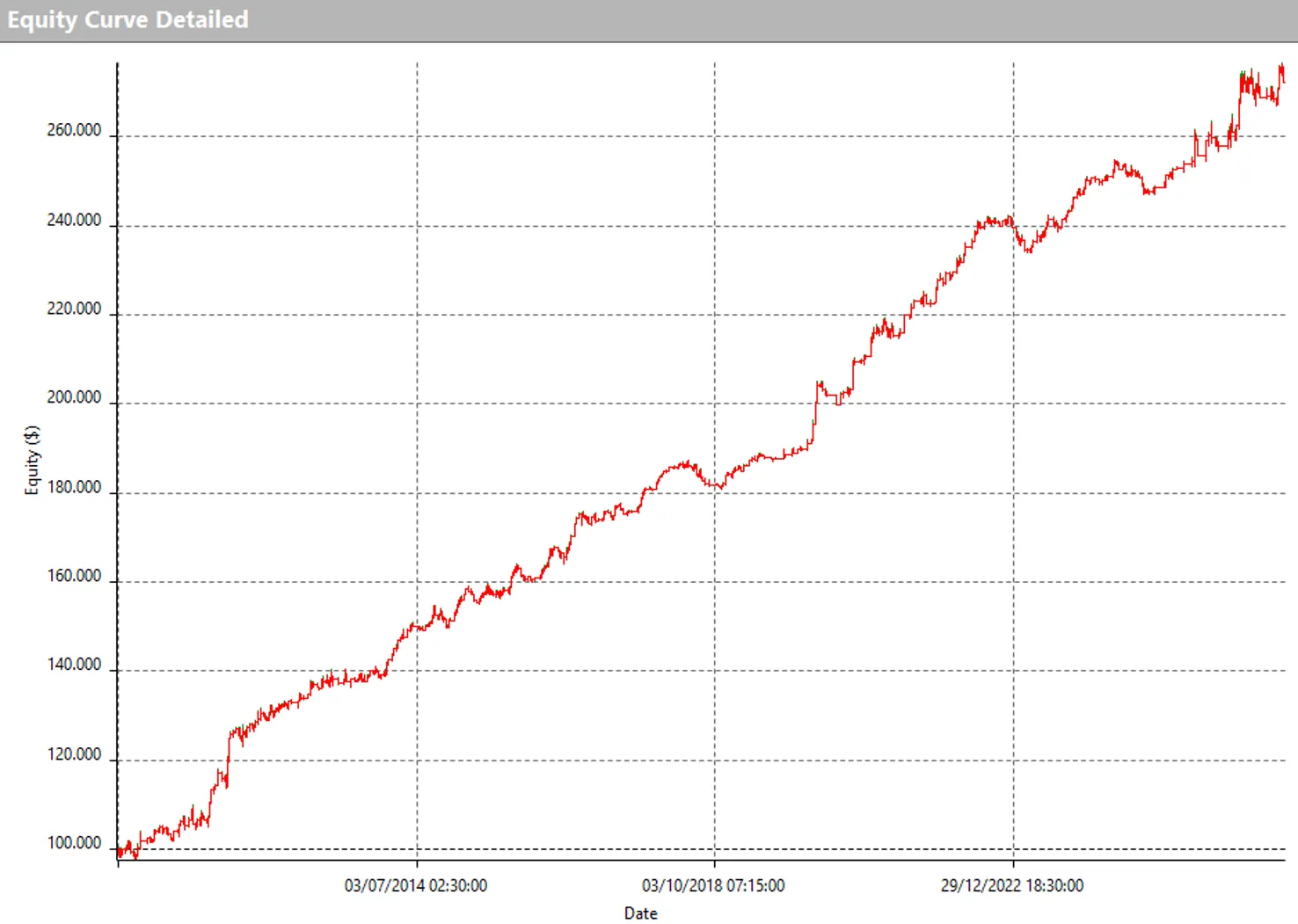
In the report presented, which Andrea explicitly states excludes commissions, limiting the system to one entry per day increases average trade from roughly $140 to roughly $160 and reduces that session’s loss. However, net profit over the test period falls by about $10,000, maximum drawdown does not improve, and some years become significantly less profitable.
Unger then considers a limit of two entries per day as a possible compromise.
Improving one metric does not necessarily improve the strategy as a whole. A change needs to be assessed in terms of overall results, drawdown, and performance across different years, rather than focusing only on the event that prompted it.
Is Day Trading Worth It? Risks and Realistic Expectations
There is no single answer for everyone. Whether an approach is viable depends on its trading rules, costs, capital, and risk exposure. Closing positions before the session ends does not automatically make trading easier or more profitable.
A study by Fernando Chague, Rodrigo De-Losso, and Bruno Giovannetti, Day Trading for a Living?, examined individuals who began day trading in the Brazilian equity futures market between 2013 and 2015. Among those who continued for at least 300 trading days, 97% lost money.
That finding applies to the sample and context studied. It should not be treated as a universal percentage for every market or trading method. It does, however, highlight the need to keep expectations of easy profits in check. The study is available in the Fundação Getulio Vargas repository.
A systematic approach helps make decisions testable and risk measurable, but a profitable backtest does not guarantee future results.
The choice between intraday and overnight trading should also fit the trader’s profile. Discomfort with holding positions between sessions may be a factor to consider; the desire to lock in quick profits is no substitute for a viable strategy.
Day Trading for Beginners: Where to Start
The first step is to learn how to evaluate a trading idea before using it in your account.
- Define clear rules. Entries, exits, trading hours, and risk management need to be explicit.
- Choose appropriate data and instruments. The test should represent the market and contract you intend to trade.
- Include realistic costs. Commissions and slippage can materially change the results.
- Analyze multiple metrics. Average trade, net profit, drawdown, and annual results need to be considered together.
- Check robustness. Examine performance on data not used during development and sensitivity to changes in parameters.
- Assess capital and exposure. Risk needs to remain manageable given the available resources, including during unfavorable periods.
The goal is to develop criteria for distinguishing an interesting idea from a strategy worth investigating further.
If you’d like to explore systematic trading and learn more about Unger Academy’s training program, you can book a free strategy session with our team and take a closer look at the Unger Method™.
Frequently Asked Questions About Day Trading
What Is Day Trading?
Day trading involves opening and closing positions within the same trading session. It describes how long trades are held, while the strategy’s rules determine when and how to enter and exit the market.
What Is the Difference Between Day Trading and Scalping?
Scalping is a form of intraday trading that targets very short price moves, often holding positions for seconds or minutes. Day trading also includes strategies that remain in the market for several hours.
How Much Do Day Traders Make?
There is no fixed or guaranteed income. Results depend on the strategy, capital, position size, and costs, and they can be negative. Historical performance cannot establish a future income level.
Which Markets Can You Consider for Day Trading?
Markets discussed by Andrea Unger include crude oil, gold, gasoline, and DAX futures. Choosing a market still requires testing the specific strategy and evaluating liquidity, costs, and monetary exposure.
Can You Day Trade the S&P 500?
Yes, but market liquidity does not guarantee that a strategy will be profitable. You need to verify that the movement captured by the system produces an adequate average trade relative to costs and risk.
Is Intraday or Overnight Trading Better?
That depends on the strategy, market, and trader’s profile. Intraday trading avoids exposure to gaps between sessions but limits the time available for a move to develop. Overnight trading allows positions to be held longer, while exposing them to price changes between sessions.
Transcription
Need More Help? Book Your FREE Strategy Session With Our Team Today!
We’ll help you map out a plan to fix the problems in your trading and get you to the next level. Answer a few questions on our application and then choose a time that works for you.