
For anyone who dreams of achieving financial freedom through the markets, losing money trading is certainly one of the biggest concerns. You often hear that only 5% of traders make money. While this figure is frequently cited, it does not necessarily represent the entire trading industry.
Available data shows that a significant percentage of retail accounts lose money. However, to interpret these figures correctly, you need to consider the financial instruments involved and the period covered by the data.
That does not mean losses are inevitable for every participant, but it does show why realistic expectations, adequate preparation, and a disciplined process matter before anyone commits meaningful capital to the markets or evaluates their results.
The market itself, however, is not the only problem. Much depends on how traders approach it.

How Many Traders Really End Up Losing Money Trading?
The claim that “only 5% of traders make money” is often repeated without explaining which markets, instruments, or observation periods it refers to.
A more verifiable reference comes from data collected by national competent authorities and published by ESMA, the European Securities and Markets Authority. According to these analyses, between 74% and 89% of retail accounts trading CFDs lose money.
It is important to clarify that these figures apply to CFDs, not to the trading industry as a whole. In addition, these percentages show how many accounts lost money during the period analyzed, but they do not tell us how many traders are capable of generating long-term results.
The most important point, therefore, is not merely the percentage itself. It is understanding why such a large share of market participants lose money and continue to make the same mistakes.
7 Mistakes That Lead to Losing Money Trading
1. Thinking Trading Is Easy
Some instructors, mentors, and self-proclaimed gurus portray trading as easy because they want to sell their “simple” method. They make people believe that studying for a few days, learning one indicator, or applying a particular trick is enough to start making money. Anyone who trusts these claims risks entering the market without adequate preparation.
The reality is different: trading is not easy. Markets are constantly changing, and a strategy that worked in the past may go through losing periods or stop behaving as expected. That is why learning a single technique is not enough.
What traders can actually learn is a process for developing, testing, and monitoring strategies based on objective rules. This allows them to be better prepared when market conditions change.
2. Treating the Market Like an ATM
Many people approach trading believing they can use the markets to quickly recover the money they need for everyday expenses or generate additional income in a short period of time.
Driven by greed and misleading claims about how easy it is to make money, they start trading without adequate knowledge and soon find themselves at the mercy of market events.
When the money at risk is needed to pay rent, utility bills, or other important expenses, every adverse market move carries enormous emotional weight. It becomes even harder to follow the rules, accept a loss, or make rational decisions.
It is already difficult to decide what to do when analyzing the market calmly. When a position is losing money and panic takes over, the risk of acting impulsively rises even further.
Scams and dishonest brokers are a separate issue. Even in regulated markets and with reputable intermediaries, trading without adequate preparation and with unrealistic expectations remains extremely dangerous.
3. Trading Without a Tested Method
In an activity defined by uncertainty, making every trading decision based on gut feelings makes it difficult to determine whether your choices follow a repeatable logic or are simply reactions to the moment.
A structured method, by contrast, allows you to define in advance:
– when to enter the market;
– when to exit;
– how much capital to risk;
– the conditions under which to apply the strategy;
– how to evaluate its behavior over time.
This is also the principle behind the Unger Method™: building trading systems, meaning sets of written rules tested on historical data through backtesting, instead of making every trade on a discretionary basis.
A method does not eliminate uncertainty, guarantee profits, or remove the possibility of losing money trading. It does, however, provide objective criteria for monitoring a strategy, checking whether it continues to behave as expected, and determining when action may be necessary.
No one would undergo open-heart surgery with a surgeon who had not completed the necessary education and training. A similar principle applies to trading: those who improvise risk causing very real damage to their capital.
4. Underestimating Your Tolerance for Losses
One common mistake that causes many people to start losing money trading is misjudging their tolerance for drawdown, meaning the decline in account equity from a previous peak. In theory, you might think you can comfortably handle a 10% drawdown. But when your account is actually down 5%, you may already begin to feel anxious and question the strategy.
The problem is that you cannot discover your true tolerance by reading a book. It only becomes clear when real money is at risk and the loss is no longer just a number in a backtest.
This is why many traders abandon potentially valid strategies at precisely the worst moment. The pain becomes too intense, they stop trading, and they risk missing the potential recovery that follows.
To reduce the risk of losing money trading, it is therefore important to begin with limited exposure and gradually observe how you respond to real fluctuations in your capital. Your risk level must be sustainable not only financially, but psychologically as well.
5. Waiting Until It Is Too Late to Manage Risk
To limit the chance of losing money trading and protect your capital, risk management must be defined before you enter the market, not after a trade has already moved against you.
Deciding how much to risk while a position is losing exposes you to the emotions of the moment. You may be tempted to move your stop-loss order, increase the size of the position to recover more quickly, or keep a trade open in the hope that the market will reverse.
Risk should instead be established through precise rules that account for your available capital, market volatility, the characteristics of the strategy, and the maximum loss you are willing to accept.
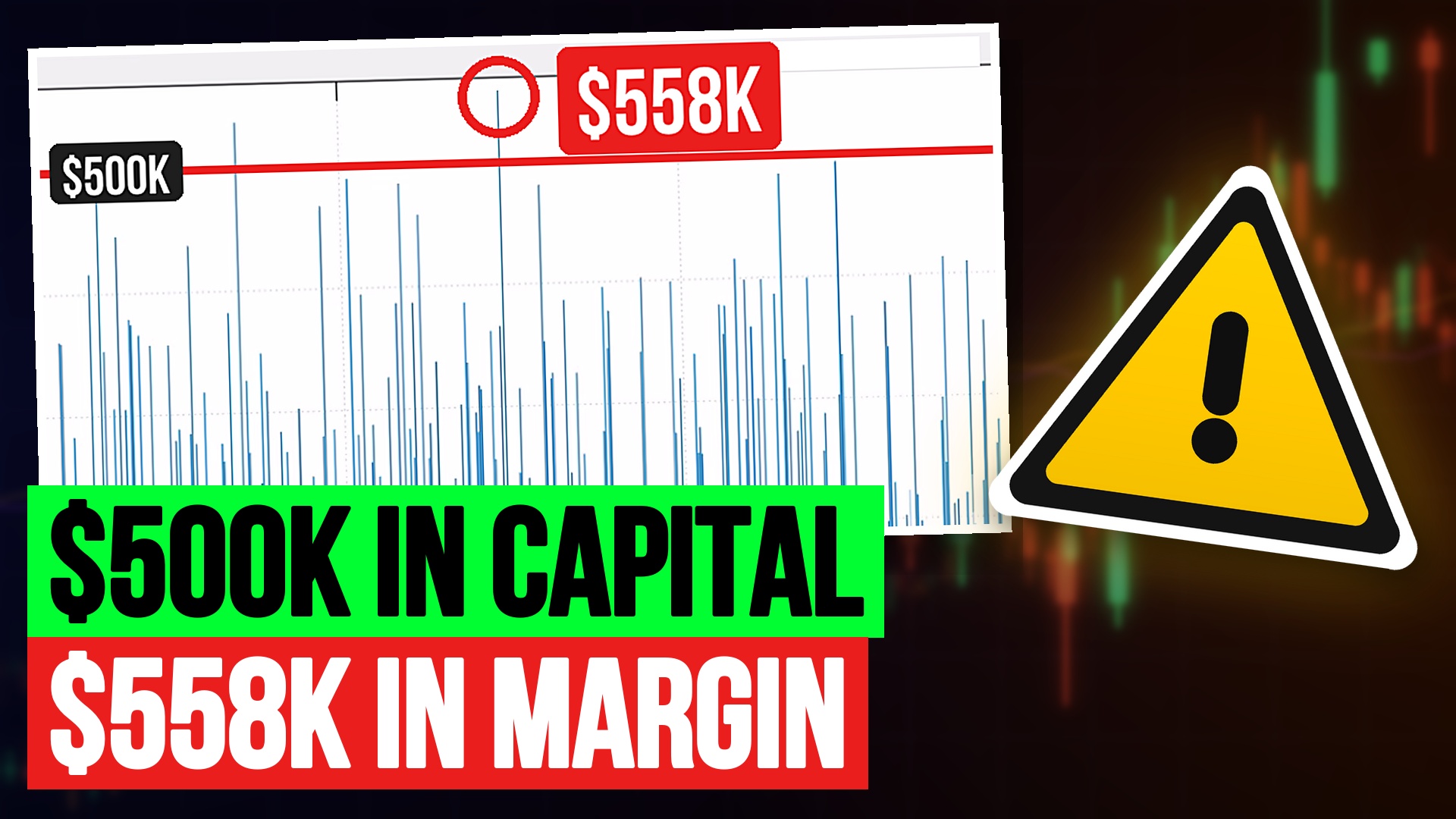
Even a good strategy can experience a string of losing trades. If position sizes are excessive, an unfavorable period can seriously damage the account before the strategy has a chance to recover.
Managing risk does not mean eliminating losses altogether, which is impossible in trading. It means keeping individual losses and losing periods compatible with both your capital and your trading plan.
6. Trusting Track Records That Are Too Short
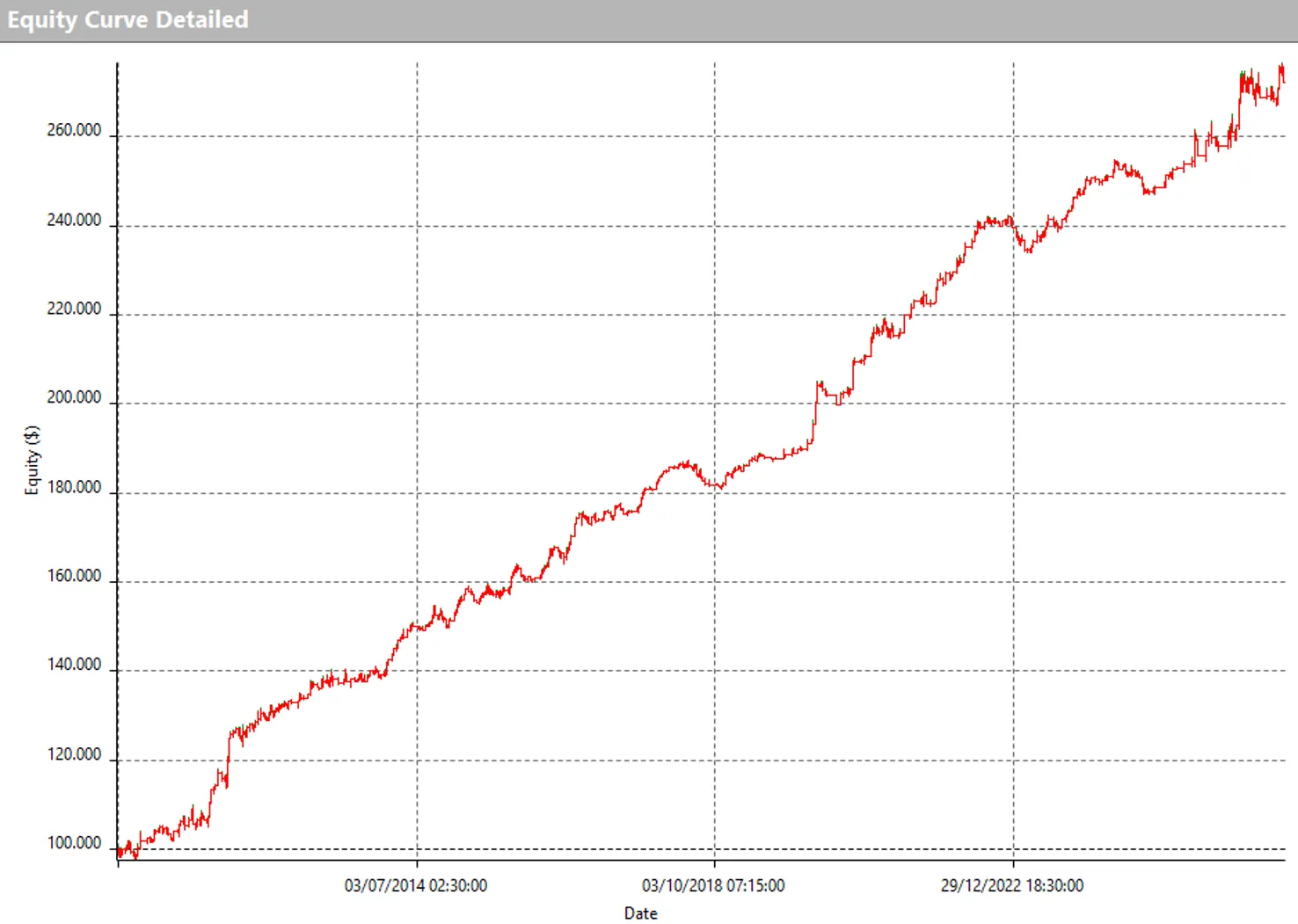
A track record is the history of results generated by a strategy or trader. After two profitable months, it is easy to believe you have found an exceptional system or possess extraordinary skill. Such a short period, however, may simply reflect good luck or market conditions that were particularly favorable to that specific strategy.
You should not evaluate a system based on a few weeks or a handful of positive months. Its history should be long enough to cover different market conditions and a meaningful number of trades.
Even with a long track record, past performance does not guarantee future results. A sufficiently broad history can, however, help you assess factors such as:
– average return;
– frequency of losses;
– duration of losing periods;
– drawdown;
– behavior under different market conditions.
Another problem is blind faith in market sayings such as “cut your losses,” “let your profits run,” or “sell and regret it.” These statements may contain a sound principle, but they do not constitute a strategy on their own. Without precise rules, anyone can interpret them however they wish and use them to justify decisions they have already made.
7. Rushing to Get Results
Many people are attracted by the promise of fast profits and immediately begin trading with real money, skipping the process of learning the fundamentals. It is a bit like running a 100-meter sprint without warming up: by the 30-meter mark, the chance of pulling something increases.
Impatience leads traders to constantly search for new strategies, switch methods after a few losses, and increase risk in an attempt to accelerate their results. This makes it nearly impossible to gather enough data to assess what they are doing objectively.
A more cautious path requires time to study, develop rules, run tests, and begin trading with exposure appropriate to your level of experience.
Studying still does not guarantee that you will make money. Even after preparing properly, some people may realize that they are not psychologically suited to trading. In that case, choosing not to continue may be the healthiest and most rational decision, with no reason to feel guilty.
Can a Method Prevent You From Losing Money Trading?
First, it is important to be clear that no method can eliminate losses entirely or guarantee that every strategy will continue to work in the future. Professional traders also experience losing trades, drawdowns, and periods when results fall below expectations. The difference is not that they never lose. It is that they keep losses within sustainable limits and evaluate strategies using data and predetermined criteria.
A structured approach can help you:
– reduce impulsive decisions;
– define risk in advance;
– evaluate a strategy using a sufficiently large data set;
– distinguish a normal losing period from abnormal behavior;
– avoid relying exclusively on intuition.
How to Protect Your Capital and Reduce the Risk of Losing Money Trading
There is no shortcut that automatically places you among the minority of traders capable of generating results over time. However, certain behaviors can help reduce avoidable mistakes:
– Build a method before you trade. Your rules must be defined and tested before you put real capital at risk.
– Start with limited exposure. Test your true tolerance for drawdown before increasing your capital allocation.
– Do not judge a strategy too quickly. A few weeks or months of positive results do not prove that a statistical edge exists.
– Manage risk before every trade. Decide in advance how much you are willing to lose, and do not change the rules under pressure.
– Evaluate results as a whole. A single trade is not enough to determine whether a strategy is valid.
– Be skeptical of promises of fast, easy profits. There are no formulas in trading that can eliminate uncertainty.
– Follow a structured learning path. Trying to learn from random YouTube videos or Telegram groups can leave you with fragmented knowledge that is difficult to apply.
Trading is not an automatic path to financial freedom, nor does it necessarily have to become a profession. It can remain a hobby or develop into a more structured activity, but only if you accept that it requires study, a sound method, and disciplined risk management.
If you recognize some of these mistakes in your own trading, the first step is not to search for a new miracle strategy. It is to identify what your current approach is missing and begin building it more rigorously.
Frequently Asked Questions
What Percentage of People End Up Losing Money Trading?
According to analyses by national competent authorities reported by ESMA, between 74% and 89% of retail accounts lose money when trading CFDs. The exact percentage may vary by broker, observation period, instruments used, and market conditions. These figures apply specifically to CFDs and cannot automatically be extended to all traders or every form of investing.
Can You Really Make Money Trading?
It is possible to generate positive results, but there are no guarantees. It requires preparation, discipline, risk management, and a method evaluated over a sufficiently long period. A few favorable weeks or months are not enough to prove that a trader or strategy can generate consistent results over time.
What Are the Main Risks of Trading?
In addition to the risk of losing money trading, one of the main dangers involves psychological reactions. Underestimating your tolerance for drawdown can cause you to abandon a strategy at the wrong time or chase losses through impulsive decisions. A written, tested method can reduce these behaviors, but it cannot eliminate risk entirely.