

Many investors discover put selling while looking for a way to generate a recurring income stream from their capital. Online, however, this strategy is often presented in overly simplistic terms: pick a stock you like, sell a put, collect the premium, and hope the option expires worthless.
In reality, selling puts is much more than that.
Without clearly defined rules, it can easily become a series of discretionary decisions driven by instinct or emotion. When incorporated into a structured approach, however, it can evolve into a repeatable, measurable strategy that can be managed consistently over time.
In this guide, you’ll learn how selling puts works, the key risks to understand before getting started, a complete numerical example, and how to turn a single options trade into a rules-based process.
What “Selling Puts” Actually Means
When you sell a put option, you take on an obligation.
In exchange for receiving an option premium upfront, you agree to buy 100 shares of the underlying stock at a predetermined price, known as the strike price, if the option is exercised before or at expiration.
If the stock remains above the strike price at expiration, the option will typically expire worthless. In that case, you keep the entire premium and no shares are purchased.
If the stock falls below the strike price, you may be assigned and required to purchase the 100 shares at the agreed strike price, regardless of the current market price.
In other words, selling a put means getting paid today in exchange for agreeing to buy a stock at a price you have already determined.
Selling a Put vs. Buying a Put
Buying and selling a put are opposite strategies, although they are often confused by investors who are new to options trading.
When you buy a put, you pay a premium for the right to sell a stock at a specified strike price. This strategy is commonly used either to profit from declining prices or to hedge an existing stock position.
When you sell a put, on the other hand, you receive the premium and accept the obligation to buy the underlying shares if the option is exercised.
Rather than profiting from a market decline, the objective is to generate income from the premium or potentially purchase a stock at a price you consider attractive. Understanding this distinction is essential because the two strategies have fundamentally different objectives and risk profiles.
Why You Receive the Premium
The option premium is the compensation you receive as soon as the position is opened. That cash is credited to your account immediately, while your obligation to purchase the shares remains in place until the option expires or is otherwise closed. The premium serves another important purpose as well: it reduces your effective purchase price if assignment occurs.
Suppose you sell a put with a $50 strike price and collect a $2 premium per share. If you are assigned, you will formally purchase the stock at $50 per share, but your effective cost basis will be $48 per share because of the premium already received.
While this does not eliminate the risk of further losses if the stock continues to decline, it does provide an initial cushion compared to buying the shares outright at the strike price.
Is Selling Puts a Bullish or Bearish Strategy?
Selling puts is generally considered a neutral-to-bullish options strategy. The ideal outcome occurs when the underlying stock remains at or above the strike price through expiration. In that case, the option expires worthless, allowing the seller to keep the entire premium received.
A moderate rise in the stock produces the same result, while the primary risk arises when the share price declines significantly below the strike price, increasing the likelihood of assignment.
For this reason, selling puts is not designed to profit from a bearish market. Instead, it is best suited for investors who are willing to buy a stock at a lower price than its current market value and would like to earn premium income while waiting for that opportunity.
A Practical Example: How Selling a Put Works
The mechanics of a short put become much easier to understand with a practical example. Assume a stock is currently trading at $52, and you would be willing to buy it if the price declined to $50. You decide to sell one put option with:
- a $50 strike price;
- 30 days until expiration;
- a $1.50 premium per share.
Because one standard equity options contract represents 100 shares, you immediately collect $150 in premium. If you are using a cash-secured put, you would also set aside $5,000 to cover the potential purchase of the shares should assignment occur. This allows you to know from the outset exactly how much capital is committed and what your maximum potential exposure would be.
Strike Price, Premium, and Breakeven
Three figures define the position.
The strike price is the price at which you may be required to purchase the shares.
The premium is the compensation you receive when opening the trade and remains yours regardless of the final outcome.
The breakeven price is calculated by subtracting the premium received from the strike price.
Using our example:
- Strike Price: $50
- Premium Received: $1.50
- Breakeven Price: $48.50
This means the position only begins to generate a net loss at expiration if the stock falls below $48.50.
Another important point is that your potential profit is capped. The maximum gain is limited to the $150 premium collected when the trade was opened. Even if the stock rallies to $60, $70, or higher, your profit does not increase beyond that amount. By contrast, the theoretical maximum loss occurs if the underlying stock were to fall to zero, offset only by the premium initially received.
What Happens at Expiration
One of the advantages of selling puts is that every possible outcome is known before the trade is even placed.
Scenario 1: The Stock Remains Above the Strike Price
If the stock is trading at $50 or higher at expiration, the put option expires worthless. The buyer has no incentive to sell shares at the strike price when the market offers a higher price.
In this scenario:
- you keep the full $150 premium;
- the $5,000 reserved for the trade becomes available again;
- you may choose to sell another put and repeat the process.
In this example, earning $150 on $5,000 of committed capital represents a 3% return for that holding period, before commissions, transaction costs, and taxes.
Scenario 2: The Stock Falls Below the Strike Price
If the stock is trading below $50 at expiration, you may be assigned. You will purchase 100 shares at the strike price of $50 per share. Since you already received a $1.50 premium, however, your effective cost basis becomes $48.50 per share.
Suppose the stock is now trading at $46. The market value of your shares would be $4,600, while your effective purchase cost would be $4,850. Your unrealized loss would therefore be $250.
It is important to recognize that this outcome is not an unexpected event but one of the possible scenarios you accepted before opening the position. For that reason, selling puts should generally be reserved for stocks you would genuinely be comfortable owning if assignment occurs.
Do You Need Cash to Sell Puts?
The answer depends on how you choose to implement the strategy.
There are two primary approaches.
Cash-Secured Puts
The more conservative approach is to keep enough cash available to purchase the shares if assignment occurs. In our example, that means setting aside $5,000. This eliminates the additional risks associated with leverage and ensures that every potential assignment is fully covered by available capital.
For this reason, cash-secured puts are generally considered the most appropriate approach for investors seeking to build a disciplined, repeatable options income strategy.
Selling Puts on Margin
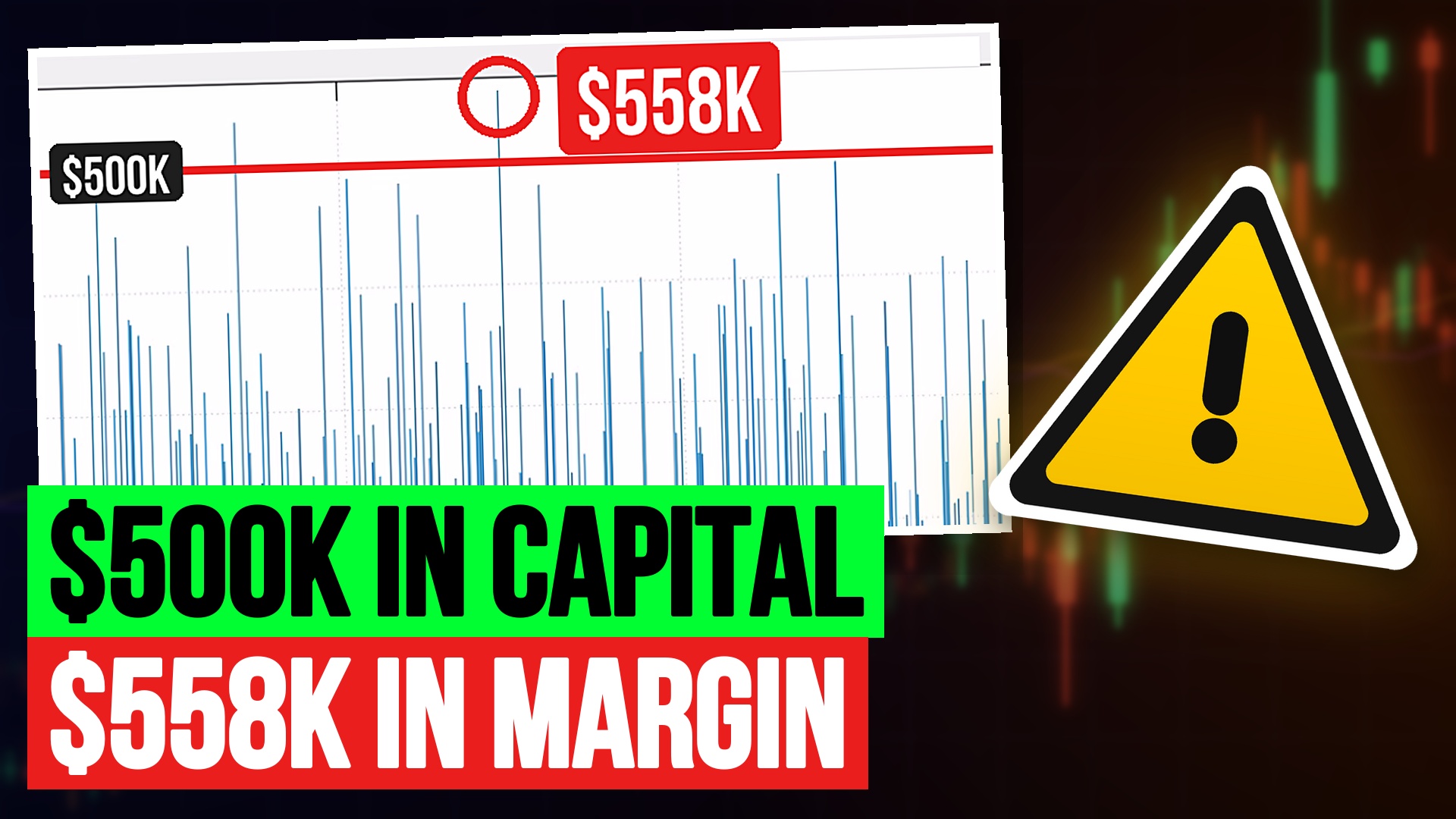
Some brokers also allow investors to sell puts using margin. Instead of setting aside the full purchase amount, only a portion of the required capital is held as collateral. This approach requires less cash and can make the premium appear more attractive relative to the capital committed.
However, it also introduces additional risk. If the market experiences a sharp decline, your broker may issue a margin call or liquidate positions to reduce risk. These are often the moments when investors are forced to make difficult decisions under unfavorable market conditions.
For anyone seeking to build a systematic, repeatable approach to options trading, cash-secured puts generally offer a more robust and disciplined framework for managing risk.
The Risks of Selling Puts: What You Should Know Before You Start
Many articles focus almost exclusively on the premium you can collect from selling puts. In reality, as with any trading or investment strategy, understanding the risks should come first.
Only by evaluating the downside before placing a trade can you determine whether this approach is appropriate for your objectives, risk tolerance, and level of experience.
Understanding the Risk Profile
Selling puts has an asymmetric risk-reward profile. On one hand, your maximum profit is limited to the premium received when you sell the option. On the other hand, potential losses can become significant if the underlying stock experiences a sharp decline. If assignment occurs, you are obligated to purchase the shares at the strike price even if the market continues moving lower.
Returning to our previous example, suppose you sold a put with a $50 strike price and the stock subsequently dropped to $35. You would still be required to purchase the shares at $50. The premium collected would reduce your effective purchase price, but it would not eliminate the downside risk associated with the declining stock.
For this reason, selling puts should generally be limited to companies you would genuinely be comfortable owning over the long term, even during periods of heightened market volatility.
Why Premium Income Is Not “Free Money”
The premium you receive is real income, but it represents compensation for assuming risk. During stable market conditions, many options expire worthless and premium income can appear remarkably consistent.
That apparent consistency often leads investors to underestimate the risks involved. When volatility increases sharply, multiple positions may be assigned at the same time, significantly increasing your portfolio exposure. Investors who have sold too many contracts or relied excessively on leverage may suddenly find themselves purchasing far more shares than they intended.
In other words, the premium should never be viewed as guaranteed income. It is simply the compensation you receive in exchange for accepting a clearly defined obligation.
Understanding this distinction is essential for approaching the strategy with realistic expectations.
Selling Puts vs. Covered Calls: When Does Each Strategy Make Sense?
Selling puts and selling covered calls are often viewed as competing strategies. In reality, they are complementary approaches designed for different situations while sharing the same objective: generating premium income through options.
The key difference lies in your starting position. Selling puts is generally appropriate when you have a neutral to moderately bullish outlook on a stock and would be willing to purchase it at a lower price than its current market value. In this case, you are compensated while waiting for a potential entry opportunity.
Covered calls, by contrast, are used when you already own the underlying shares. By selling a call option, you generate additional premium income while accepting that your upside will be capped if the stock rises above the strike price.
Rather than choosing one strategy over the other, many experienced options traders use both as part of a broader investment process, transitioning from selling puts to selling covered calls if assignment occurs. That is where understanding individual options strategies evolves into building a structured trading methodology.
From Individual Trades to a Rules-Based Process
Understanding how selling puts works is only the beginning. The real difference lies not in any single trade, but in how consistently the strategy is applied over time. A discretionary put sale remains an isolated trading decision.
A put-selling strategy governed by objective rules becomes part of a repeatable process that can be tested, measured, refined, and executed consistently. This is the philosophy behind our systematic approach to the markets.
Rather than trying to identify the “perfect” trade each time, the objective is to build a process capable of producing consistent behavior across different market environments.
Objective Rules for Selecting Strike Prices and Expirations
One of the most common mistakes investors make is selecting strike prices and expiration dates based solely on intuition or on whichever option appears to offer the highest premium. A systematic approach works very differently. Before any position is opened, predefined rules establish:
- which underlying stocks qualify;
- how far the strike price should be from the current market price;
- which expiration cycles should be considered;
- under which market conditions new positions may be opened;
- and when it is preferable to remain out of the market altogether.
The objective is to replace emotional decision-making with objective, repeatable criteria. Only then can a strategy be properly evaluated to determine whether it truly offers a statistical edge.
Risk Should Be Managed at the Portfolio Level
New options traders often evaluate each position independently. Professional portfolio management takes a much broader perspective. The question is not simply: “How much risk does this individual trade carry?” A more important question is: “What happens if several positions are assigned simultaneously?”
Answering that requires evaluating total portfolio exposure, available capital, sector concentration, and the potential interaction between multiple positions. Managing risk from a portfolio perspective is one of the characteristics that separates a structured methodology from a collection of unrelated trades.
The Wheel: Turning Two Strategies into One Continuous Process
One of the best-known options income strategies is The Wheel. It combines put selling and covered call writing into a single, continuous process. The concept is straightforward. You begin by selling a cash-secured put on a stock you would be willing to own.
If the option expires worthless, you keep the premium and repeat the process. If assignment occurs, the shares enter your portfolio. At that point, you begin selling covered calls against those shares, generating additional premium income while holding the position. If the shares are eventually called away, the cycle starts over with another cash-secured put.
This sequence of events is precisely why the strategy is known as The Wheel. Simply understanding the mechanics, however, is not enough. If strike prices, expirations, and position sizes are selected based solely on intuition, The Wheel becomes little more than a series of discretionary decisions.
When every step follows predefined, objective rules, the strategy becomes something entirely different: a structured, repeatable process in which every decision is part of a broader methodology rather than an isolated judgment call.
Who Is Selling Puts Suitable For?
Selling puts is not the right strategy for every investor, and it is important to be clear about that from the outset.
It may be well suited to investors who already have a basic understanding of the financial markets, are comfortable with the mechanics of options trading, and have sufficient capital to support a disciplined, cash-secured approach.
It is particularly appropriate for those who prefer following a structured process rather than making decisions based on intuition, and who view trading as a long-term activity built on risk management, consistency, and clearly defined rules.
On the other hand, selling puts is unlikely to be the right choice for anyone looking for quick profits, guaranteed income, or a strategy that requires little preparation.
Like any trading approach, it demands discipline, realistic expectations, and a thorough understanding of the risks involved.
Frequently Asked Questions
Is Selling Puts Bullish or Bearish?
Selling puts is generally considered a neutral-to-bullish strategy. Its objective is to generate premium income while the underlying stock remains above the strike price or, if assignment occurs, to purchase shares at a price the investor considers attractive.
Is It Better to Sell Puts or Covered Calls?
Neither strategy is inherently better. Selling puts is typically appropriate when you would like to purchase a stock at a lower price than its current market value. Covered calls, on the other hand, are designed for investors who already own shares and want to generate additional income by selling call options against their existing position. The two strategies can also be combined, as they are in The Wheel strategy.
Do You Need Cash to Sell Puts?
If you are implementing a cash-secured put, yes. You should have sufficient cash available to purchase the underlying shares if assignment occurs. Selling puts on margin requires less capital upfront but introduces additional risks associated with leverage and potential margin calls.
Is Selling Puts a Good Strategy?
It can be, provided it is applied within a disciplined risk management framework. The quality of the underlying stocks, position sizing, portfolio exposure, and consistency of execution all have a much greater impact on long-term results than the premium collected from any individual trade. Like every trading strategy, selling puts involves risk and does not guarantee positive returns.
From Understanding the Strategy to Building a Process
Learning how selling puts works is only the first step.
The real difference lies in the method used to apply the strategy over time.
Working with clearly defined rules, validating ideas through historical data, and building a repeatable decision-making process are what allow traders to approach the markets with greater discipline and reduce the influence of emotions on their trading decisions.
If you would like to learn more about this systematic approach and find out whether a data-driven trading methodology is suitable for your goals, you can book a Free Strategy Session with one of our trading mentors.
During the session, we’ll discuss your current level of experience, answer your questions, and show you how we apply quantitative rules, historical testing, and systematic risk management to build structured, repeatable trading strategies.
Disclaimer: Trading options involves a substantial risk of loss and is not suitable for every investor. The examples above are illustrative and are not specific recommendations. Past performance does not guarantee future results.