
The Best Trading Books to Build a Real Method (Not Just Read About Markets)
Need More Help? Book Your FREE Strategy Session With Our Team Today!
We’ll help you map out a plan to fix the problems in your trading and get you to the next level. Answer a few questions on our application and then choose a time that works for you.
If you read one book this year, read Jack Schwager’s Market Wizards. Not because it teaches you a system — it doesn’t — but because it shows you, through dozens of top traders talking candidly, that there is no single holy grail. Every successful trader built their own method. That insight alone is worth more than most trading courses.
Stack it with Van K. Tharp’s Trade Your Way to Financial Freedom, and you have something practical: a framework for sizing positions, measuring expectancy (the average amount you make per dollar risked — more on this below), and designing a trading approach that fits your personality and risk tolerance, not someone else’s.
That’s the organizing principle behind this list. We’re not ranking books by sales figures or Amazon stars. We’re ranking them by how much they contribute to building a structured, rules-based trading method. The approach behind 4 World Cup Trading Championships is systematic. These are the books that move you in that direction.
How We Chose The Best Trading Books (The Systematic-Method Filter)
Most “best trading books” lists are popularity contests. This one applies a single filter: does this book help you build a method you can define, test, and improve?
That means:
– Rules-based thinking — can you articulate your entry, exit, and sizing decisions as rules?
– Testability — does the book give you something you could run against historical data?
– Honest about risk — does it address drawdown (the peak-to-trough loss in an equity curve, not just a bad day) and money management seriously?
– Psychology as a system, not a pep talk — does it treat trader behavior as something you can train and manage, not just “stay disciplined”?
Books that make vague promises, rely on secret indicators, or imply that reading them will make you wealthy were excluded. The ones to avoid are flagged at the end — knowing what to skip is as valuable as knowing what to read.
Best Trading Books for Beginners (Start Here)
Jack Schwager — Market Wizards (and The New Market Wizards)
What it teaches: Schwager interviews top traders — futures legends, macro traders, technical traders — and lets them describe how they think, what mistakes shaped them, and how they developed their edge. This is not a manual. It’s a perspective expander.
Who it’s for: Anyone early in their trading journey who is still looking for the “right” system. This book will save you years of chasing other people’s methods by showing you that every sustainable edge is personal.
What it teaches toward a method: The recurring theme across every interview is that losers look for someone else’s system; winners build their own, test it relentlessly, and stick to it through drawdown. That mindset is what the rest of this list builds on.
One caveat: It won’t give you a system. Read it alongside Tharp, not instead of him.
Van K. Tharp — Trade Your Way to Financial Freedom
What it teaches: Two core concepts that most traders never learn properly: expectancy and position sizing.
Expectancy is the average amount you make per dollar risked across a sample of trades. A simple example: if you win 40% of the time but your average winner is twice your average loser, your expectancy is positive — you make money over time even while losing most trades. Most traders focus on win rate; Tharp shows why that’s the wrong metric.
Position sizing is how much of your capital you risk on each trade. It’s arguably the most powerful lever in trading, and beginners who focus on entries almost entirely ignore it.
Who it’s for: Traders at any level who have not yet thought systematically about risk and bet sizing. This is a foundational read.
One caveat: Some sections feel dense and repetitive. The core ideas are absorbed in the first half; the rest is reinforcement.
Best Trading Books on Psychology
Mark Douglas — Trading in the Zone
What it teaches: Douglas makes a single, important argument: losing is not primarily a knowledge problem — it’s a probability problem. Traders lose not because they don’t know enough, but because they can’t accept that any individual trade is random even when their method has positive expectancy.
The book trains you to think in terms of “sample of trades” rather than “this trade.” When you genuinely internalize that, you stop second-guessing entries and exits mid-trade. You execute the method.
Who it’s for: Traders who have a method but can’t follow it. If you’ve ever moved a stop loss, held a losing trade hoping it reverses, or skipped a signal because of a recent bad experience — this book addresses that directly.
One caveat: The philosophical framing can feel repetitive. The core insight is there by chapter 6; the rest is reinforcement.
Brett Steenbarger — The Daily Trading Coach
What it teaches: Steenbarger is a psychologist who has worked directly with professional traders. Unlike Douglas, who writes at a conceptual level, Steenbarger gives you practical exercises — journaling frameworks, performance review methods, techniques for managing emotional reactions in real time.
Who it’s for: Discretionary or hybrid traders who want structured self-coaching tools. Systematic traders who find that rule-breaking happens under stress will also get value from it.
One caveat: The 101-lesson format means you can dip in and out. Some lessons are more applicable than others depending on your trading style. For a deeper look at when systematic and discretionary approaches diverge, see our piece on discretionary vs systematic trading.
Best Trading Books on Building and Testing a Trading System
Backtesting and Rules-Based Design
Robert Pardo — The Evaluation and Optimization of Trading Strategies
What it teaches: Pardo is the authoritative technical reference on backtesting — the process of testing a trading strategy against historical price data to estimate how it would have performed. The book covers walk-forward analysis (testing on data the strategy was not optimized on), avoiding curve-fitting (when a strategy is tuned so tightly to past data that it fails on new data), and the full testing workflow from design to deployment.
Who it’s for: Traders moving from intuition to systematic strategy development. If you’ve never backtested properly — meaning with out-of-sample validation and robustness checks — this is the technical foundation.
One caveat: Dry and technical. This is a reference book, not a page-turner. Read it when you have a strategy to test, not as an introduction.
Andrea Unger — The Unger Method and Money Management
Andrea Unger is the only trader in history to have won the World Cup Championship of Futures Trading four times. His books explore his systematic trading approach, from strategy development to money management, and are designed for those who want to understand how a professional trading methodology works from the perspective of someone who has applied it successfully in both his personal trading and world-class trading competitions for more than 25 years.
What they cover. The process of developing and testing rule-based trading strategies; money management principles applied to a diversified portfolio of trading systems; and the mindset of a trader who relies on objective rules rather than emotions or market opinions.
Who they are for. Traders looking for clear, practical material written by someone with a proven and verifiable track record.
The Unger Method: The Winning Strategy of the Only Four-Time World Trading Champion is one of the best trading books ever for systematic trading. It provides a solid foundation in the core concepts of trading while exploring the key principles of the Unger Method, the process used to develop, validate, and trade systematic strategies live – the same process that helped Andrea Unger become one of the most recognized traders in the world.
If you would like to learn more, you can request your free copy of the book by clicking here.
Kevin Davey — Building Winning Algorithmic Trading Systems
What it teaches: Davey is a three-time World Cup Trading Championships winner. His book documents his actual strategy development process: where ideas come from, how he codes and tests them, how he evaluates robustness, and how he decides when to retire a strategy that stops working.
Backtesting is the central skill here. Davey’s approach is systematic in the strict sense: every decision has a rule or a test behind it. There is no “gut feel” step.
Who it’s for: Traders who want to build and automate strategies but find the quantitative literature too academic. Davey writes for practitioners, not theorists. The book covers coding basics (primarily in TradeStation’s EasyLanguage), but the core ideas apply to any platform.
One caveat: Platform-specific coding examples age quickly. Focus on the methodology and apply it to whatever tools you use.
Best Trading Books on Risk and Money Management
Both Van K. Tharp (Trade Your Way to Financial Freedom, covered above) and Ralph Vince’s work on optimal f and portfolio mathematics cover this territory in depth.
Ralph Vince is the mathematician behind much of modern risk theory in trading. His books (The Mathematics of Money Management, The Leverage Space Trading Model) are technical and not light reading — but if you want to understand position sizing at a rigorous level, Vince is the primary source. The core idea: how much you bet relative to your capital matters more than which trades you take. Most traders underestimate this until they’ve experienced a significant drawdown.
The practical takeaway from both Tharp and Vince: never risk more than a fixed percentage of your capital on any single trade. Keep that percentage small. Let positive expectancy do its work over a large sample. This is not exciting. It is how systematic traders protect themselves from ruin while staying in the game long enough for their edge to express itself.
For a deeper treatment of how this applies to strategy robustness, see our piece on why perfect strategies fail live. The connection between money management and long-term survivability is also at the core of a systematic risk management approach — one that treats risk as an engineering problem, not a behavioral suggestion.
Books to Skip (and Why) — The Get-Rich-Quick Trap
Not every bestselling trading book deserves your time. Here are the categories to avoid and why they fail:
“Secret indicator” books. Any book promising a proprietary indicator that “most traders don’t know about” is misleading you. Indicators are mathematical derivatives of price. They contain no information the price itself does not contain. Whatever value exists — if any — comes from how an indicator is used within a systematic framework, not from the indicator itself.
“Quit your job in 30 days” / “Make $X per day” titles. These books target the fantasy, not the reality. Trading requires capital, edge development, risk management, and time. Any book claiming you can achieve financial independence in 30 days — or promising daily dollar targets — contradicts the experience of every serious trader in Market Wizards.
“The simple system that works.” Simplicity in a trading system is a virtue; simplicity in a sales pitch is a red flag. If a system were reliably profitable with no expertise required, institutional capital would arbitrage it away. Real edges are specific, testable, and require ongoing maintenance.
The pattern: these books make money for their authors, not their readers. They sell certainty in a domain defined by probability. Spend your reading budget on books that make you more rigorous, not more optimistic.
From Reading to Doing: Turning the Best Trading Books List Into a Method
Reading Market Wizards, Tharp, or Douglas won’t make you a trader.
It will give you a vocabulary and a framework. The next step, however, is structured and very different from simply reading.
The Problem with Trading Book Readers. Many traders read ten books but have never tested a single idea on real market data. They’ve never written down the rules of a strategy, never measured a system’s expectancy before trading it, and never validated whether an idea actually has an edge.
Reading creates the feeling of progress without the risk of discovering that your favorite idea doesn’t work.
How to Turn Reading into Real Progress
- After finishing each book, write down the three practical ideas you learned. Not the interesting concepts, but the ones that genuinely change how you approach the markets.
- Take one of those ideas and build explicit rules around it. Not “buy when the market is going up,” but precise, measurable conditions that a computer could execute without interpretation.
- Test those rules on historical data. Evaluate the expectancy, maximum drawdown, and average number of trades per year. Only then decide whether the strategy is worth trading.
This is the step that separates people who read about trading from those who trade professionally.
Discretionary trading often leads to inconsistent results because decisions change with emotions, opinions, and market conditions. Systematic trading, as explained in detail in this analysis of discretionary versus systematic trading, creates a repeatable and objective framework.
Another point that trading books rarely emphasize is that a strategy that performs well in backtesting may stop working in live trading. Understanding why seemingly perfect strategies fail in live markets is an essential part of the development process, not an exception.
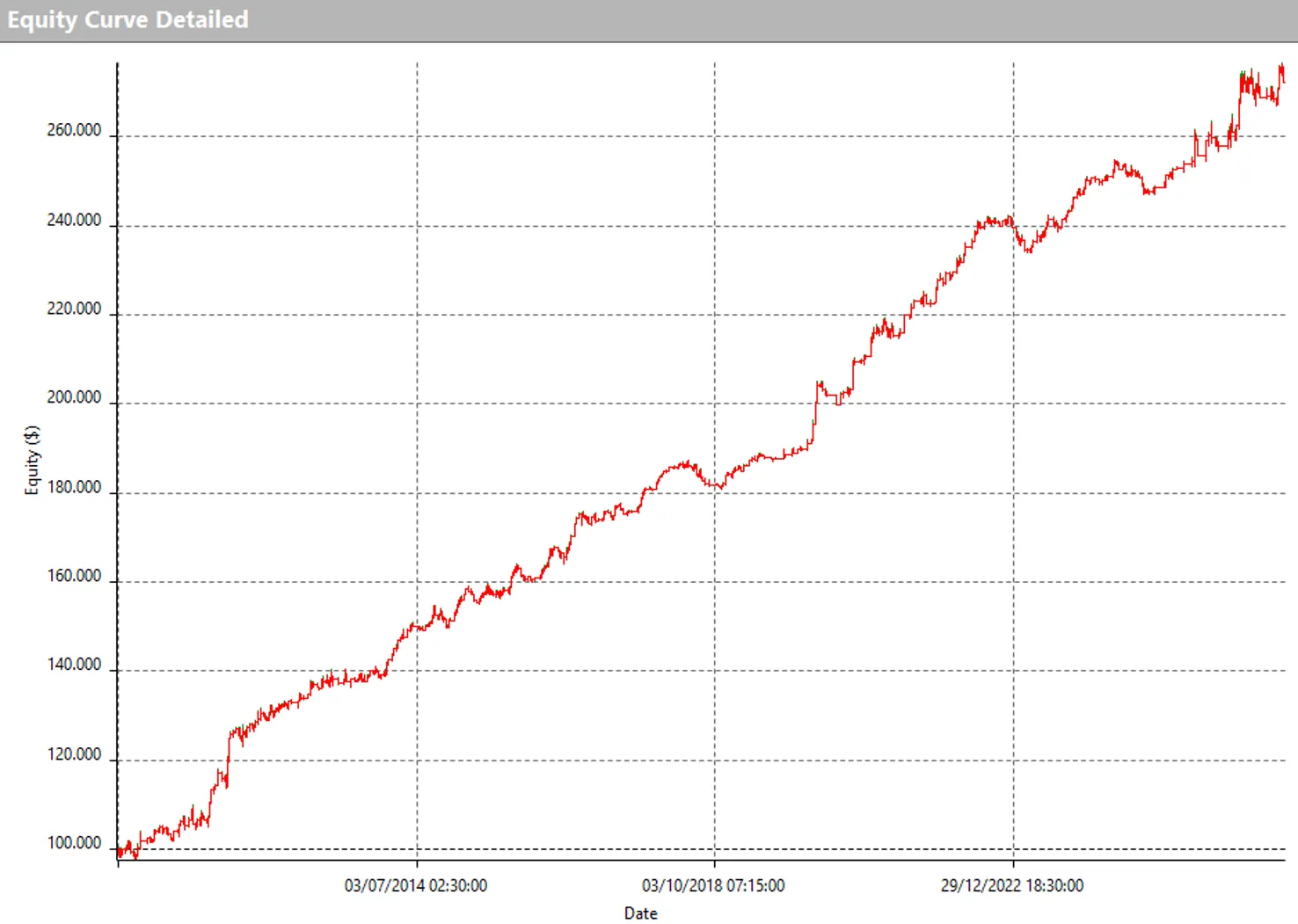
And when it comes to real-world results rather than simulations, it helps to look at traders who have been operating systematically for years. Reviewing the actual performance of a systematic trader can help set realistic expectations about what a rules-based approach may achieve over the long term.
If you’ve already read two or three of the best trading books from this list and are ready to move from studying to a structured learning path, a free orientation session with the Unger Academy team is a great place to assess where you are and determine what makes sense as your next step – with no obligation and no promises of returns.
You can schedule your session using the dedicated button you’ll find at the end of this article, after the FAQ section.
Enjoy the reading, and happy trading!
FAQ
Can I make $1,000 per day from reading trading books?
No. Any book or course claiming you can should be treated with deep skepticism. Reading builds knowledge; knowledge enables method development; a tested method with positive expectancy can produce consistent results over time — but no daily dollar target is realistic or honest. Trading outcomes depend on capital, market conditions, strategy robustness, and discipline applied over hundreds of trades, not a reading sprint.
What should I study to learn trading?
Start with the conceptual foundations: how markets work, what expectancy means, how position sizing affects outcomes. Then study strategy design and backtesting — how to build a testable hypothesis and evaluate it rigorously. Psychology comes next, once you have rules to follow. The books on this list cover all three layers in sequence. Formal education in statistics or programming is useful but not required.
Do 97% of traders lose money?
The figure varies by study and market, but the direction is consistent: most retail traders who attempt active trading lose money over time. The primary reasons are not bad luck — they are systematic: no defined edge, poor risk management, and behavior that undermines whatever edge they do have (moving stops, overtrading, abandoning strategies during drawdown). A systematic approach addresses all three. It does not promise profit, but it gives you a measurable framework to improve within.
Transcription
Need More Help? Book Your FREE Strategy Session With Our Team Today!
We’ll help you map out a plan to fix the problems in your trading and get you to the next level. Answer a few questions on our application and then choose a time that works for you.